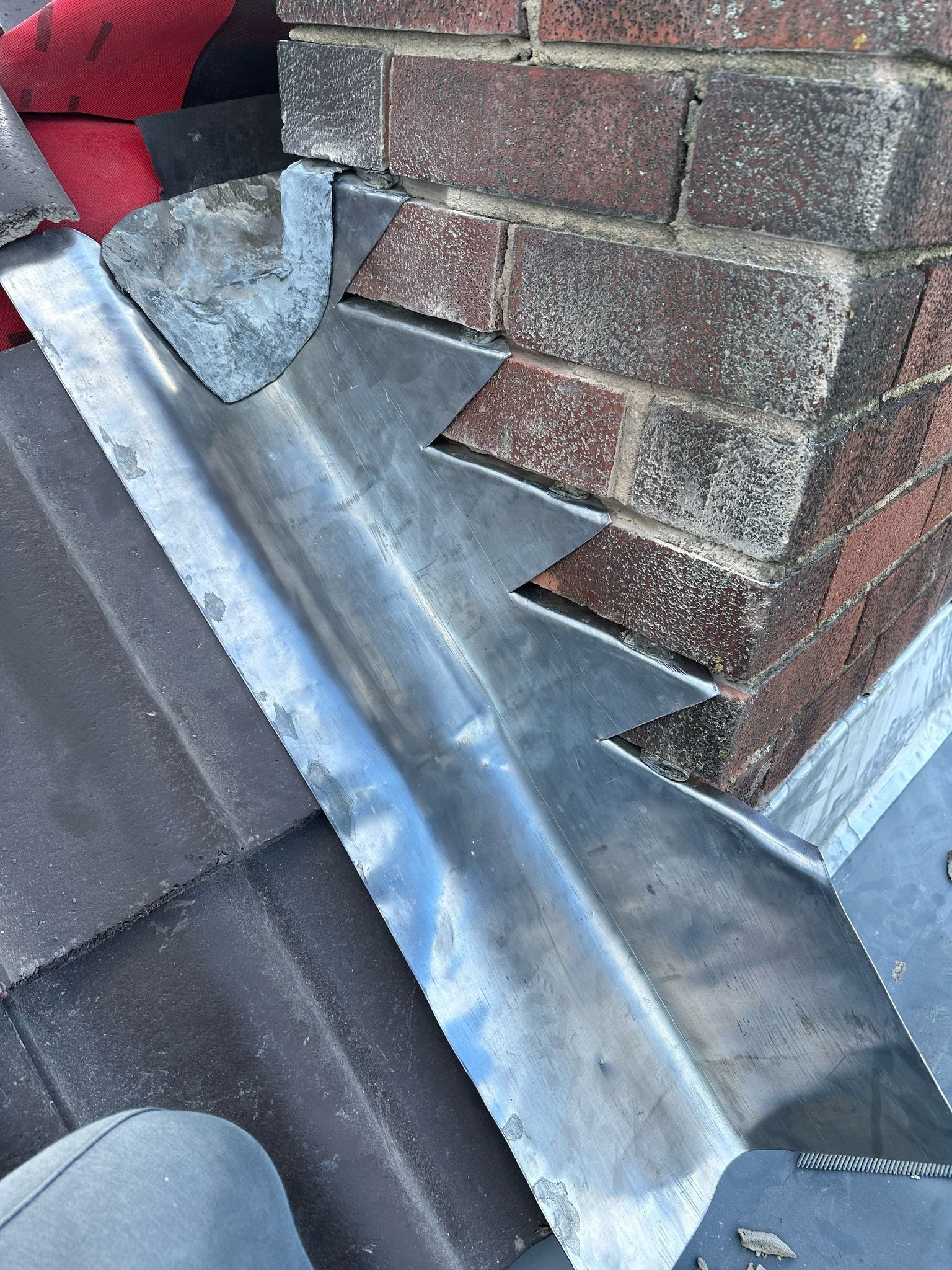
Leadwork is where roofing stops being a trade and becomes a craft. A valley or a chimney flashing has to be cut, dressed and lapped so that it sheds water for fifty years while the lead expands and contracts every day. We do all our own leadwork, following the industry guidance on codes, piece lengths and fixings, and it is the part of a job we are proudest of.
What we fit and renew
- Step and cover flashings to chimneys and abutting walls.
- Back gutters behind chimney stacks, which is the single most common source of a chimney-breast leak.
- Soakers under slates and tiles at every abutment.
- Valleys in lead, either open or secret, replacing rusted steel or cracked GRP valley trays.
- Aprons and saddles at the base of stacks and where ridges meet walls.
- Flashings to roof windows and lanterns, dressed to suit the covering.
- Lead rolls and parapet gutters on older stone property.
Doing it right
Lead is only as good as its fixing. We use the correct code for the detail, keep pieces to the lengths the lead can tolerate, chase the lead into the masonry and point it with lead sealant or mortar as the detail demands, and fix with copper or stainless clips rather than hoping it stays put. It costs a little more in time and it is the difference between leadwork that lasts and leadwork that leaks.
On its own or as part of a roof
Most of our leadwork is done as part of a re-roof or a chimney job, where it is covered by the guarantee on that work. We also take on stand-alone leadwork: a failed back gutter, a split valley, flashings to a new extension or a roof window that was never flashed properly in the first place.